What Happens to Your Solar Panels During a South Carolina Hurricane
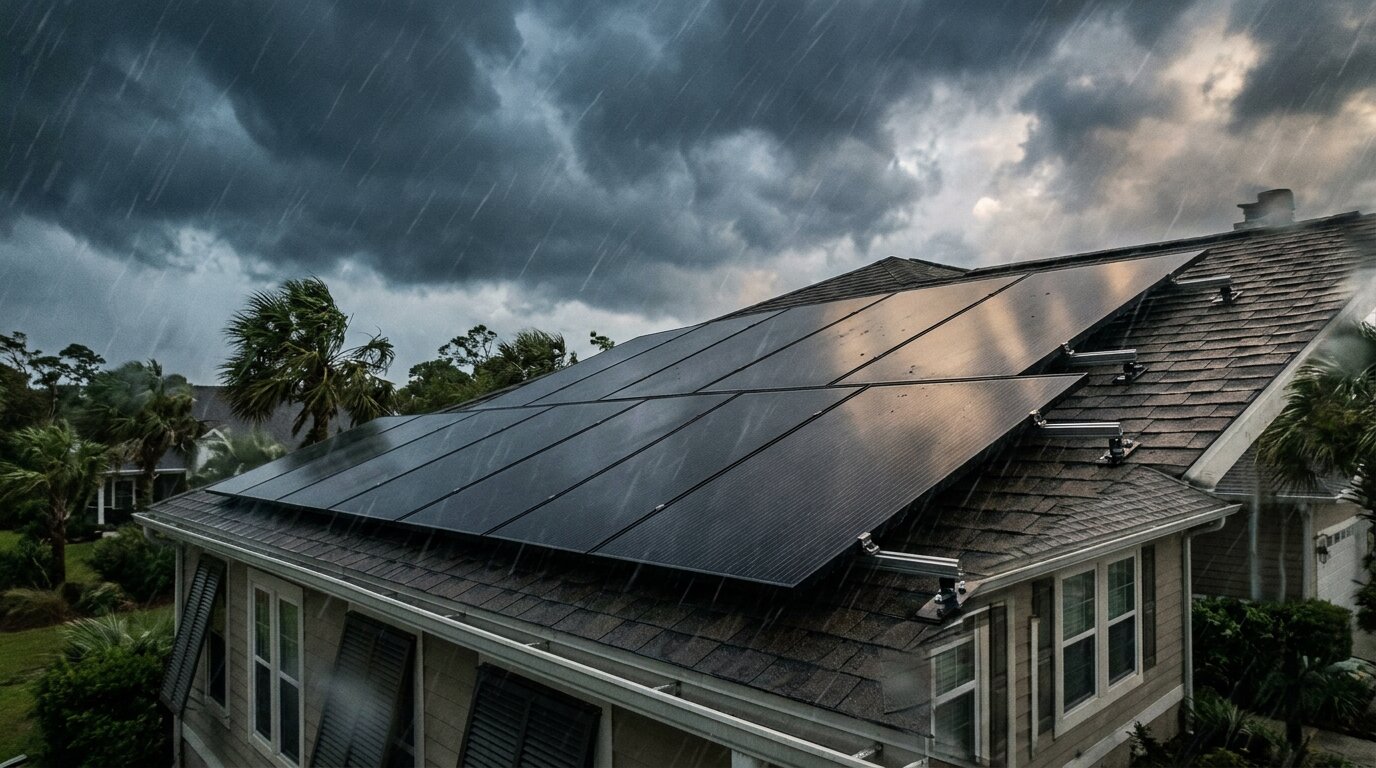
When a hurricane barrels through South Carolina, your solar panels face intense wind, heavy rain, and flying debris. The integrity of your system depends on a mix of factors—mounting, maintenance, and local storm history. You might wonder if your panels can withstand these conditions, or what you should do to protect them. Before risking your investment, there’s more you need to know about weathering the storm and securing your solar energy future.
Can Solar Panels Withstand Hurricane-Force Winds?
The endurance of Solar Panels in South Carolina in hurricane-prone areas, such as South Carolina, is a topic of interest for homeowners considering installation.
Modern solar panels are typically designed to withstand high wind speeds, with many models rated for gusts starting at 140 mph or more. These panels are installed using heavy-duty lag bolts and a robust racking system specifically to minimize the risk of wind uplift and damage from debris.
According to research from the Department of Energy and the National Renewable Energy Laboratory (NREL), instances of system damage during extreme weather events are infrequent, even under conditions of wind reaching up to 180 mph.
Additionally, solar panel systems deployed by utility companies, such as Duke Energy, undergo rigorous testing to ensure their resilience in storm conditions. Given these design considerations and tested standards, the likelihood of needing to file an insurance claim due to damage from hurricane-force winds is reduced.
Nonetheless, it is advisable for homeowners to review their specific installation and consult with professionals to ensure compliance with local building codes and regulations.
Requirements for Solar Panel Installation in Storm-Prone Regions
In South Carolina, the installation of solar panels is subject to rigorous requirements due to the recurring threat of hurricanes and severe weather. Solar panels must be engineered and tested to endure high wind speeds and potential debris impact. This often involves utilizing data from reputable sources such as the National Renewable Energy Laboratory (NREL) to inform design criteria and performance standards.
Installers typically employ lag bolts that are anchored into roof beams to enhance structural integrity and secure the solar systems against extreme weather conditions. Additionally, proper sealing techniques are essential to prevent water infiltration and other weather-related issues.
It is crucial for homeowners to verify that their insurance policies adequately cover potential damage to solar panel systems, as many standard policies may not extend coverage to solar installations or associated components, such as backup battery systems.
Furthermore, it is advisable to ensure that the solar installation complies with local building codes designed to address storm conditions, as well as to review guidelines provided by the Department of Energy. Adhering to these regulations contributes to not only the effectiveness of the solar system but also the overall safety of the property.
How Solar Panels Performed During Previous Hurricanes
Historical data indicates that rooftop solar panels in South Carolina have generally demonstrated resilience during hurricanes, with many systems remaining intact despite exposure to severe weather conditions. Events such as Hurricane Matthew and Hurricane Florence serve as case studies, revealing that a majority of residential solar panel installations sustained little to no damage, even in the face of high winds and debris.
According to the National Renewable Energy Laboratory (NREL), only 0.1% of solar panel systems nationwide reported storm-related damage. This statistic suggests that solar panels, particularly those engineered to withstand challenging weather in regions prone to hurricanes like the Carolinas, Florida, and New Jersey, have maintained operational functionality during and after such events.
Many systems were able to provide power continuity and facilitate a quick restoration of electricity following disruptions.
It is also noteworthy that insurance coverage typically includes damage to solar panel systems incurred during severe weather events, which may alleviate concerns about long-term financial implications for homeowners. This information can be valuable for homeowners and policy makers when considering the integration of renewable energy infrastructure in hurricane-prone areas.
Preparing Your Solar System Before a Storm
Preparing your solar system for impending storms is a critical aspect of maintaining its integrity and functionality. Begin by scheduling a pre-season inspection to ensure that all components, including solar panels, lag bolts, and associated hardware, are secure and manufactured to withstand high wind speeds.
It is advisable to trim any overhanging branches that could potentially become airborne debris during extreme weather events. This is a precautionary measure that has proven beneficial for homeowners in various regions, particularly those prone to hurricanes.
In addition to physical preparations, assess your backup battery storage and ensure that your solar panels are properly maintained. Cleaning your panels not only optimizes their performance but also allows you to document their condition with photographs. This documentation can be valuable for maintenance records or insurance claims.
Review your insurance policies and warranties to ascertain the extent of coverage related to storm damage. Understanding the details of these agreements can facilitate a smoother claims process should any issues arise as a result of severe weather conditions.
It is prudent to have all pertinent information readily accessible, as this can significantly aid in addressing any potential claims.
What to Do With Your Solar Panels After a Hurricane
After a hurricane, it is important to evaluate the state of your solar panels. Begin this process by inspecting from ground level for visible signs of damage, such as cracked glass or loosened mounting systems. It is advisable to refrain from climbing onto the roof to conduct this assessment due to safety concerns.
Instead, document any observed damage with photographs for purposes related to insurance claims.
Subsequently, contact your solar panel installation company to arrange for a professional inspection. While solar panels are engineered to withstand high wind conditions, severe weather events can result in damage from debris or wind uplift.
It is crucial to avoid attempting any repairs yourself, as unsafe or malfunctioning systems can pose risks to both power generation and overall safety.
Additionally, it is prudent to file an insurance claim promptly. Include all relevant information, such as records of pre-storm conditions and routine maintenance performed on the solar panels.
This approach can help ensure that your claim is processed efficiently and supports your recovery efforts after the storm.
Are There Hurricane-Resistant Solar Panels?
When evaluating solar panels for installation in hurricane-prone regions, it's important to understand the resilience of these systems to extreme weather conditions.
Although there is no official designation of "hurricane-resistant" solar panels, many options are designed with durability in mind. Leading manufacturers subject their products to rigorous testing by agencies such as the National Renewable Energy Laboratory (NREL) and the Department of Energy. Some panels can endure wind gusts of up to 160 mph, which aligns with the conditions encountered in areas like Florida and Puerto Rico during severe storms.
To further enhance their resistance to strong winds and airborne debris, solar installations often incorporate substantial racking systems, lag bolts, and sealed connections.
Proper installation practices are crucial, as they can mitigate potential damage and ensure that the panels remain operational during adverse weather events. Routine maintenance of solar panel systems can also play a significant role in preserving functionality, thus providing an ongoing source of power and potentially reducing costs associated with damage from severe weather.
In summary, while no solar panel can be guaranteed to be completely hurricane-proof, selecting high-quality panels with appropriate installation and maintenance practices can enhance their ability to withstand severe weather conditions.
The Role of Homeowners Insurance in Protecting Solar Systems
Homeowners insurance plays a crucial role in offering protection for solar systems, particularly during hurricane season in South Carolina. It is important for homeowners to ensure that their insurance policy adequately covers potential risks associated with such weather events. Coverage should include protection against storm damage, high winds, flying debris, and wind uplift, all of which are prevalent during hurricanes.
In the event that solar panels sustain damage from extreme weather, homeowners insurance can facilitate repairs. Some policies may also extend coverage to maintenance costs associated with keeping solar systems operational.
To aid in the claims process, it is advisable for homeowners to document the condition of their solar energy systems prior to hurricane season. This can include taking clear photographs and maintaining records of system maintenance.
For the most accurate and up-to-date information on insurance coverage related to solar installations, homeowners should consult resources such as the Department of Energy or the National Renewable Energy Laboratory. These organizations provide valuable insights into insurance considerations and best practices for protecting solar investments.
Enhancing Resilience With Solar Battery Backup
Solar battery backup systems serve as a functional alternative during grid outages, particularly in regions prone to severe weather events such as storms.
These systems are engineered to operate under conditions of high wind, effectively safeguarding residential properties from potential damage while ensuring that critical appliances and pumps remain operational.
According to the Department of Energy and the National Renewable Energy Laboratory (NREL), integrating backup batteries with solar panel systems can maintain electricity supply, even when traditional power plants become nonfunctional due to environmental hazards like strong winds or debris.
It is essential for homeowners to regularly maintain their solar battery systems, including components such as lag bolts and roof beams, to ensure that they can withstand extreme weather conditions.
Proper maintenance not only enhances the resilience of energy systems but also protects the homeowner's investment in renewable energy infrastructure.
By doing so, individuals can better prepare for the challenges posed by climate-related disruptions to the power grid.
Conclusion
Ultimately, protecting your solar panels during a South Carolina hurricane comes down to preparation and vigilance. By securing your system, reviewing your insurance, and planning ahead for storms, you’ll reduce damage risk and maintain energy production. After a hurricane, inspect everything thoroughly and call professionals for any serious repairs. With the right measures, your solar investment can weather the challenges of hurricane season and keep powering your home for years to come.